 Main Site
 Admission
 Apply Online
 Help
Help saltlake@apeejayschool.com
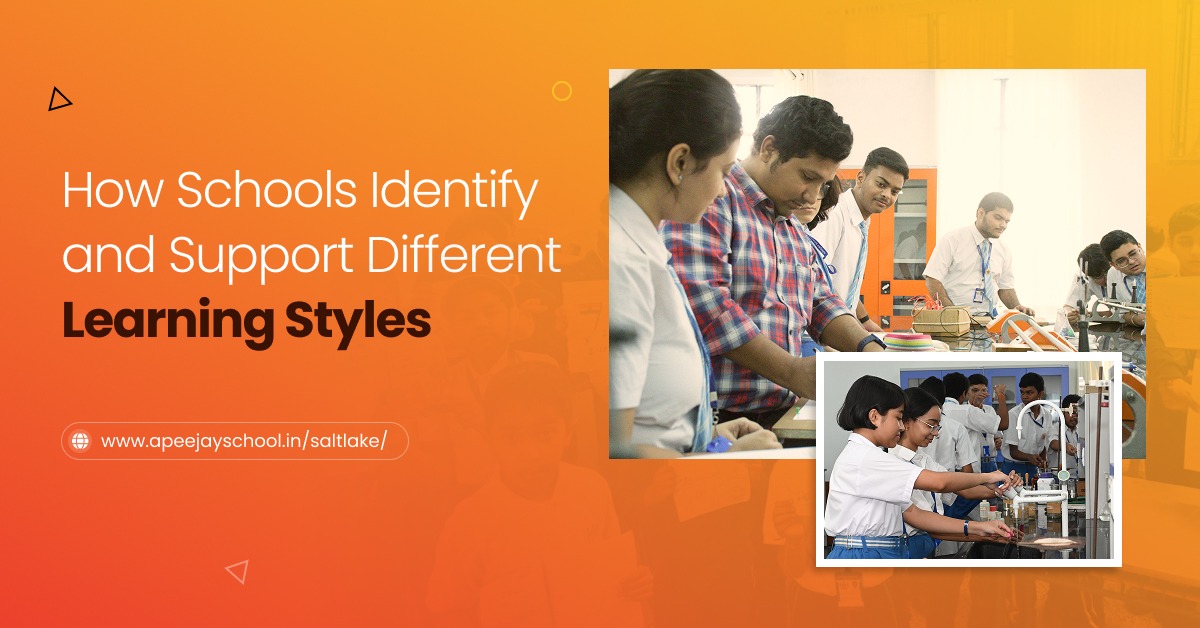
How Schools Identify and Support Different Learning Styles in Students
Every child learns differently and grows through unique experiences. Understanding different learning styles in students helps teachers build confidence, curiosity and lifelong skills. This blog discusses how Apeejay believes in inclusive education practices through effective teaching methods to create every student’s future-ready journey.
How Apeejay School Identifies Different Learning Styles in Students?
1. Continuous Classroom Observation
Teachers carefully observe every student’s classroom participation and learning behavior. They notice attention levels, communication patterns and problem-solving approaches daily. These observations reveal different learning styles in students without creating unnecessary pressure.
2. Regular Academic and Skill-Based Assessments
Apeejay uses varied assessments beyond traditional written examinations. Students complete projects, presentations, practical activities and creative assignments regularly. These evaluations highlight varied strengths, interests and improvement areas.
3. Student Interaction and Individual Feedback
Teachers conduct regular discussions with students inside and outside classrooms. They encourage honest conversations about interests, challenges and learning preferences. It also supports inclusive education practices by respecting every student’s unique abilities.
4. Parent-Teacher Collaboration
Parents provide valuable insights about children’s learning habits at home. Apeejay encourages frequent parent-teacher meetings throughout the academic year. Combined observations create a complete understanding of student development.
5. Activity-Based Performance Analysis
Students participate in sports, arts, debates, science activities and group projects regularly. Teachers evaluate performance across different learning environments and situations. These experiences reveal different learning styles in students beyond classroom academics.
FAQ. How do teachers identify different styles in learning in students?
Teachers observe classroom behavior, assess assignments, conduct discussions and review participation regularly. They also collect parent feedback and evaluate performance across different activities. Teachers then adapt lessons accordingly for better learning outcomes.
FAQ. How do schools support students?
Schools provide personalized instruction, interactive classrooms, practical activities and emotional guidance. Teachers use multiple teaching techniques to improve understanding. Students receive opportunities across academics, sports, arts and leadership.
How Apeejay School Supports Different Learning Styles in Students?
1. Personalized Learning Experiences
Apeejay designs lessons according to different learning styles in students whenever possible. Teachers include visual, auditory, reading and practical learning opportunities together. Every child receives equal opportunities to understand classroom concepts confidently.
2. Interactive and Technology-Enabled Classrooms
Smart classrooms encourage better participation and active engagement every day. Teachers combine videos, presentations, demonstrations and digital resources effectively. These strategies and effective teaching methods improve understanding and knowledge retention significantly.
3. Experiential and Collaborative Learning
Students learn through experiments, discussions, field visits and collaborative classroom projects. These experiences develop creativity, teamwork, communication and critical thinking naturally. Such activities support inclusive education practices ensuring every student actively participates.
4. Emotional and Academic Support
Teachers understand emotional well-being directly influences academic success and confidence. Regular mentoring sessions help students overcome learning challenges comfortably. Every learner feels respected, motivated and encouraged to succeed.
5. Holistic Development Programs
Apeejay promotes balanced growth through academics, sports, performing arts and leadership activities. Students discover talents while building confidence beyond textbooks. Holistic opportunities strengthen different learning styles in students through meaningful real-life experiences. Therefore, children develop future-ready skills with confidence and purpose.
FAQ. Why is identifying different learning techniques important in schools?
Every student understands information differently and progresses at a unique pace. Identifying learning styles helps teachers plan suitable classroom activities and teaching strategies. This approach improves academic performance and overall personality development.
FAQ. How does Apeejay School create a future-ready learning environment?
Apeejay combines academic excellence with innovation, technology, creativity and holistic development. Teachers use personalized instruction and engaging classroom experiences regularly. Students develop confidence, communication, collaboration and problem-solving abilities.
Conclusion
Recognizing different learning styles in students creates stronger academic success and personal confidence. Apeejay combines innovation, compassion and personalized teaching for meaningful learning experiences. Visit Apeejay Schools today and explore an educational environment where every learner truly thrives.