 Main Site
 Admissions
 Apply Online
 Help
 parkstreet@apeejayschool.com

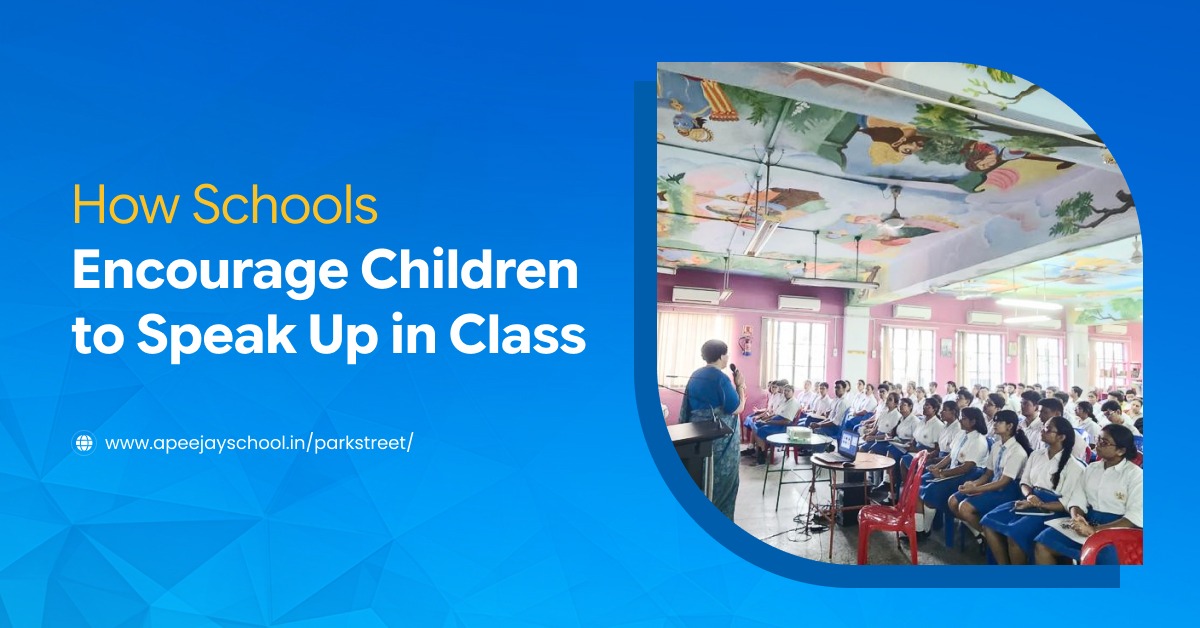
How Schools Encourage Children to Speak Up in Class
Strong communication skills for students shape their academic and personal success. Children who express ideas clearly learn faster and think deeper. Speaking up in class helps them share opinions, ask questions and clarify doubts. Moreover, it teaches them to listen, respond and collaborate with others. Many students feel shy and need gentle encouragement from teachers. Therefore, schools must create spaces where every voice matters. This blog explores how schools like Apeejay School encourage public speaking skills of students. They also focus on building confidence in children.
Why Communication Skills for Students Matter in Class?
Good communication skills for students make learning active and enjoyable. Firstly, they help children understand lessons better through discussion. Similarly, regular classroom interaction sharpens critical thinking and memory. Students who speak freely also develop public speaking skills for students early. In addition, when children speak up, it supports building confidence in them step by step. Teachers also assess understanding faster when students voice their thoughts. Furthermore, clear communication reduces misunderstandings between teachers and learners. Peers learn from each other’s perspectives too. As a result, classrooms become lively, respectful and productive.
How Apeejay School Encourages Students to Speak Up?
1. A Warm and Safe Classroom Environment
Apeejay School creates a warm, judgment-free classroom atmosphere. Teachers welcome every answer, even incorrect ones. As a result, shy children feel safe to speak. Mistakes are not treated as embarrassment now and become learning moments. This approach supports children in building confidence every single day.
2. Interactive Teaching Methods
Teachers use questions, discussions and activities instead of long lectures. Consequently, classroom interaction becomes a daily habit. Students answer, debate and explain their thinking aloud. Group tasks also give quieter children equal chances. These methods strengthen communication skills for students naturally.
3. Show-and-Tell and Storytelling Sessions
Young learners present favourite stories to classmates. First, they practise speaking in front of small, friendly audiences. Then, they answer simple questions from peers. This builds clear speech and steady eye contact. Over time, it helps in developing public speaking skills of students.
4. Debates and Group Discussions
Debates teach students to argue ideas with logic and respect. Teachers assign topics that match each grade level. Moreover, students research facts before presenting their views. Rebuttal rounds improve quick thinking and active listening. Consequently, communication skills for students improve with every debate.
5. Morning Assemblies and Stage Opportunities
Morning assemblies let students lead prayers, news and thoughts. Similarly, annual days and cultural events offer bigger stages. Children learn to face large audiences calmly. Each performance adds to their self-belief. Thus, stage exposure boosts public speaking skills for students further.
6. Positive Feedback and Encouragement
Teachers praise effort before suggesting improvements. Specific feedback helps students know what worked well. Likewise, gentle tips guide them toward better expression. Rewards and appreciation motivate hesitant speakers. This steady support is vital for building confidence in children.
7. Peer Learning and Collaborative Projects
Group projects require every member to share ideas. Students plan, present and defend their work together. Meanwhile, teammates encourage one another during presentations. Peer feedback also improves listening and respect. Such teamwork enhances classroom interaction across all subjects.
8. Clubs That Build Communication Skills for Students
Apeejay School runs literary, drama and elocution clubs. Students join activities based on their interests. Quizzes, recitations and role-plays improve vocabulary and fluency. Additionally, teachers offer personal guidance on pronunciation. These clubs complete the school’s approach to communication growth.
Conclusion
Schools play a vital role in developing communication skills for students. Apeejay School shows that safe spaces, activities and feedback work together. Moreover, children grow into confident speakers and thoughtful listeners. Therefore, choose a school that values every child’s voice. Visit Apeejay School today and give your child the confidence to speak up!
Recent Posts
- How Schools Encourage Children to Speak Up in Class
- Career Guidance from Middle School Onwards
- Common Mistakes Students Make Before Exams
- 🔬 Celebrating Curiosity, Creativity & Innovation! 🌟 MIND MATRIX 2.0
- 🌱 Ek Pedh Maa Ke Naam 🌱
- 🇮🇳 Har Ghar Tiranga Campaign 2026 🇮🇳 Independence Day 2026 Celebration