 Apply Online
 Contact
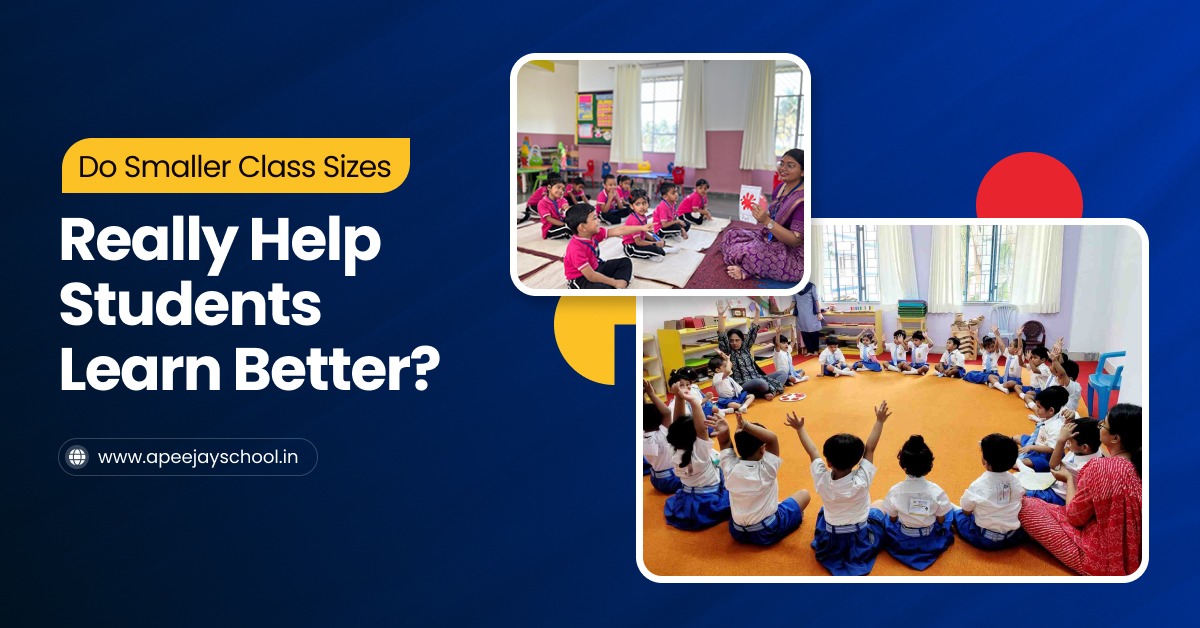
Do Small Class Sizes Really Help Students Learn Better?
Small class sizes can help teachers understand students and support their individual learning needs. They encourage meaningful interaction, better attention and stronger participation during classroom activities. They also improve personalized learning and contribute to the quality of education in schools. This blog discusses their need and benefits in schools like Apeejay School for holistic student development.
Why Do Small Class Sizes Help Students Learn Better?
Smaller classrooms allow teachers to understand each learner’s strengths and challenges. They can adjust teaching methods according to different learning abilities. This approach makes personalized learning more practical and effective for students. A healthy student teacher ratio also creates better communication and classroom participation. Therefore, the classroom learning environment becomes more supportive, focused and interactive. Apeejay School prioritises students above everything while encouraging confident and meaningful learning.
What Are the Benefits of Small Class Sizes in Apeejay School?
1. Better Individual Attention
Teachers can closely observe every student’s progress and learning needs. Students also receive timely guidance during lessons and activities. This support builds confidence and encourages students to participate actively. These benefits of small class sizes help learners make steady academic progress.
2. Stronger Teacher-Student Relationships
Small class sizes maintain the student teacher ratio helping teachers in interacting more meaningfully with students. Students feel comfortable asking questions and expressing their opinions. Teachers can also understand individual interests, abilities and learning preferences. This connection creates trust and encourages students to learn without hesitation.
3. More Effective Personalised Support
Teachers can provide additional explanations when students face difficult concepts. They can also offer advanced tasks to students who learn quickly. Such flexibility ensures that every learner receives suitable academic challenges. Students can therefore progress according to their abilities and learning pace.
4. Greater Classroom Participation
Smaller groups give students more opportunities to speak and share ideas. Teachers can encourage quieter learners to participate in discussions. Students also gain confidence through presentations, teamwork and classroom activities. Regular participation strengthens communication and critical thinking skills. Consequently, students become more active contributors to classroom learning.
5. Improved Academic Focus
A smaller group can reduce classroom distractions and unnecessary interruptions. Teachers can maintain better focus throughout lessons and activities. Students receive clearer instructions and more opportunities to clarify doubts. This focused approach supports deeper understanding and stronger academic performance. It also contributes to quality education in schools.
6. Better Learning Environment
Teachers can create routines that suit the needs of their students. They can manage classroom activities more effectively and maintain discipline positively. Students experience greater comfort while collaborating with their classmates. This supportive atmosphere encourages curiosity, creativity, and independent thinking. It strengthens the overall learning experience across different subjects.
7. Stronger Peer Interaction
Smaller groups encourage students to work closely with different classmates. They learn to listen, cooperate, communicate and respect different viewpoints. Group activities can also help students develop leadership and problem-solving skills. These experiences support social development alongside academic growth. Therefore, smaller classrooms can encourage more balanced student development.
Advantages of Having Small Class Sizes at Apeejay School
- Students receive greater attention during lessons and classroom activities.
- Teachers can identify learning gaps and provide timely academic support.
- Students gain more opportunities to ask questions and express ideas.
- Classroom discussions become more interactive, focused, and meaningful.
- Teachers can encourage individual strengths through suitable learning activities.
- Smaller groups can create a calmer and more supportive classroom atmosphere.
- Students receive better opportunities for balanced academic and personal development.
Conclusion
Small class sizes can create stronger opportunities for meaningful and personalised student learning. They allow teachers to understand learners and respond to their changing educational needs. Apeejay School uses student-focused approaches to encourage academic and holistic development. Parents seeking nurturing learning environments can Contact Apeejay School and its educational approach for child’s confident and complete development!
Recent Posts
- What Happens When a Child Struggles to Make Friends at School?
- Cyber Safety Tips for Students: How Schools and Parents Can Keep Children Safe Online
- Is AI Replacing Homework? Here’s What Schools Think…
- Sleep Habits That Improve Academic Performance
- Do Small Class Sizes Really Help Students Learn Better?
- How Schools Help Shy Children Become Confident