 Apply Online
 Contact

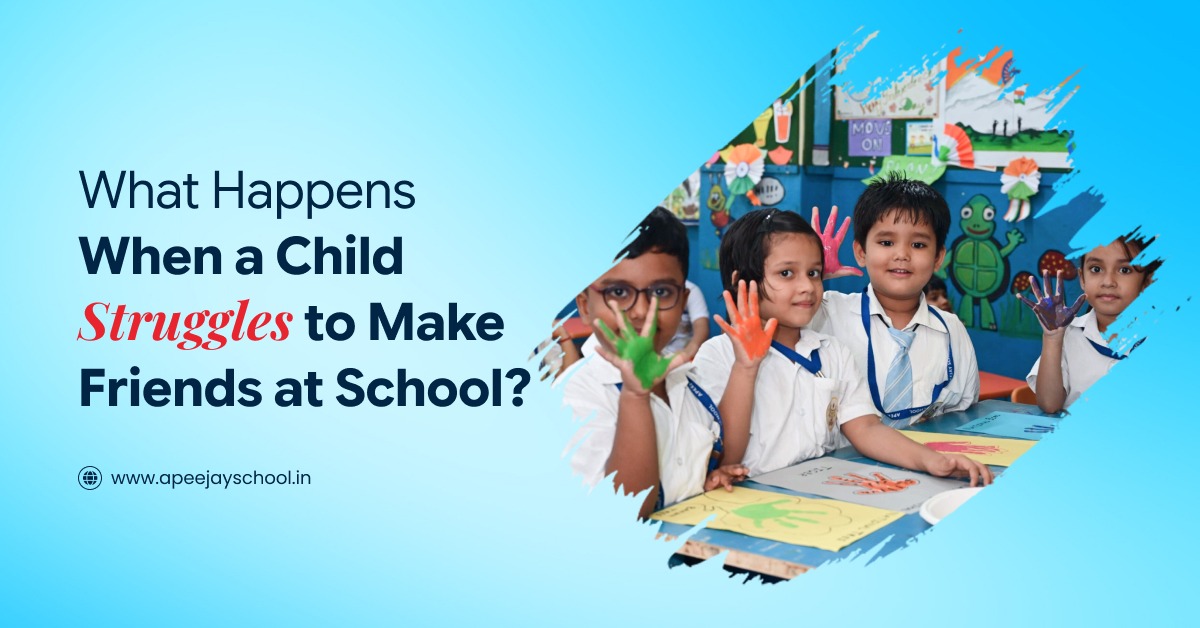
What Happens When a Child Struggles to Make Friends at School?
School friendships shape how children grow, learn and feel about themselves. They build social development through sharing, teamwork and trust. Today many children face difficulty making friends at school because of screens and crowded classrooms. This blog explores what happens when a child struggles to make friends at school.
Why Is Making Friends Important in School?
Friends make school a happier place for every child. Positive peer bonds support healthy social development from an early age. Children learn empathy, patience and cooperation through daily play and conversation. Moreover, friendships boost confidence and classroom participation. Strong friendships also give children emotional support during stressful moments. When a child struggles to make friends, these benefits slip away quickly. Therefore, parents and teachers must notice problems in friendships at school early and act with care.
Why Do Children Struggle to Make Friends in School?
- Shyness or low self-esteem makes starting conversations feel frightening.
- Poor communication skills often lead to misunderstandings with classmates.
- A new school or class can leave a child feeling like an outsider.
- Bullying or teasing damages trust and discourages further attempts.
- Excess screen time reduces real-world practice and causes difficulty making friends at school.
- Anxiety or sensory sensitivities can make group settings feel overwhelming.
- Limited social exposure is often where a child struggles to make friends
- Unresolved school friendship problems frequently repeat themselves every year.
What Are the Consequences When a Child Struggles to Make Friends?
1. Loneliness and Isolation
Lonely children often eat lunch and play alone. Isolation quickly affects their mood and daily energy. They may feel invisible in a busy classroom. Persistent loneliness can also lower their overall happiness.
2. Low Self-Esteem
Children without friends often blame themselves. They start believing something is wrong with them. Consequently, their confidence drops in class and on the playground. Poor self-image can follow them for years which can affect their careers.
3. Academic Decline
Friends make group work and discussions easier. Without them, children participate less in class. Moreover, they may avoid school activities altogether. Falling grades often follow this withdrawal.
4. Weak Social Development
Peer interaction teaches negotiation, sharing and conflict resolution. Missing these lessons slows the development be it physical, mental or societal. Children may then struggle with teamwork later. As a result, adult relationships can also become harder.
5. Emotional Distress
Ongoing difficulties that come up while making friends at school often triggers anxiety. Some children develop stomach aches or sleep trouble. Others become irritable or tearful at home. Parents should treat these signs seriously.
6. School Avoidance
Unhappy children begin dreading their mornings. They may fake illness to stay home. Frequent absences then widen the gap with peers. It affects their attendance too. Unaddressed friendship problems in school make this cycle worse.
How Does Apeejay School Support Friendship and Growth?
Apeejay School treats friendship as a core part of learning. Teachers use group projects, clubs and sports to bring students together. Counsellors guide shy children with confidence-building activities. Moreover, peer-buddy programmes help new students settle in quickly. Assemblies and values-based lessons teach kindness, inclusion and respect. Regular updates ensure that no child struggles to make friends unnoticed. Together, these efforts resolve school friendship problems and strengthen the development in this society at every stage. Consequently, every student finds a place to belong. Open communication also keeps parents involved in each step.
Conclusion
Friendships give children joy, confidence and a strong sense of belonging. When a child struggles to make friends, timely support makes all the difference. Parents can listen, encourage and partner with teachers to help. Schools can create inclusive spaces where every child feels valued. Together, adults can turn lonely days into happy ones. Connect with Apeejay School today and help your child build lasting friendships!
Recent Posts
- What Happens When a Child Struggles to Make Friends at School?
- Cyber Safety Tips for Students: How Schools and Parents Can Keep Children Safe Online
- Is AI Replacing Homework? Here’s What Schools Think…
- Sleep Habits That Improve Academic Performance
- Do Small Class Sizes Really Help Students Learn Better?
- How Schools Help Shy Children Become Confident