 Apply Online
 Contact
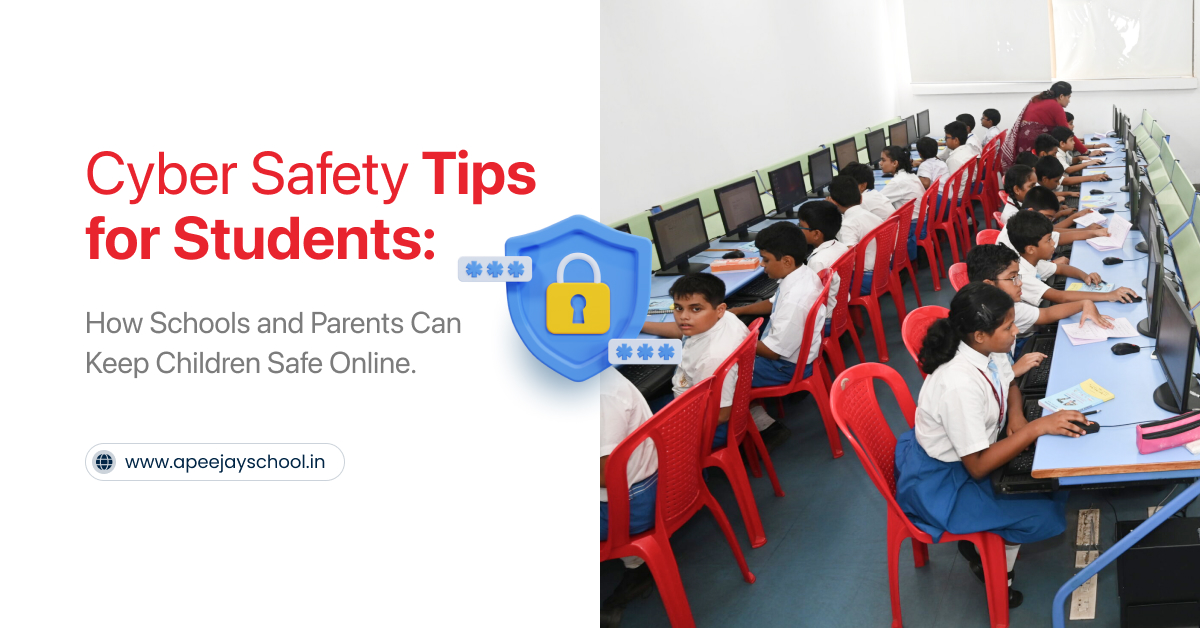
Cyber Safety Tips for Students: How Schools and Parents Can Keep Children Safe Online
Cyber awareness for students has become essential in today’s connected learning environment. Children use the internet for learning, communication, entertainment and creativity. Therefore, they need guidance to identify online risks and make responsible choices. This blog discusses important cyber safety tips for students dedicated by Apeejay School for cyberbullying prevention.
8 Cyber Safety Tips for Students for Cyberbullying Prevention
1. Teach Students to Protect Personal Information
Apeejay school teaches children never to share sensitive information online. This includes addresses, phone numbers, passwords and school details. Students should also avoid sharing private photographs with unknown people. Moreover, they should check privacy settings on every social platform. This simple practice forms one of the most important cyber safety tips for students.
2. Encourage Strong and Private Passwords
Students should create strong passwords for every important account. They should avoid using birthdays, names or simple number combinations. Schools encourage students to use different passwords for different platforms. Parents can also teach children why passwords must remain private. Additionally, two-factor authentication can provide another layer of account protection.
3. Create Clear Cyberbullying Reporting Systems
Children need safe ways to report bullying and online harassment. Schools like Apeejay School provide guidance about reporting inappropriate digital behaviour. Students should save evidence like screenshots instead of responding with anger or threats. Furthermore, trusted adults can take timely action through effective cyberbullying prevention practices. This approach supports cyber awareness for students through practical everyday guidance.
4. Encourage Students to Think Before Clicking
Unknown links can lead students toward harmful websites or scams. Therefore, children should avoid clicking suspicious links in messages. They should also check website addresses before entering personal information. Apeejay School explains how fake contests and messages can deceive young users. Parents can reinforce these lessons through regular conversations at home.
5. Teach Safe Online Learning Practices
Digital learning requires students to use websites, applications and online resources. However, every online resource may not provide reliable or secure content. Schools guide students toward trusted educational platforms and verified resources. These habits make safe internet use for students more consistent and secure. Responsible posting supports digital citizenship for students and builds respectful online communities.
6. Encourage Open Communication With Parents
Children should feel comfortable discussing uncomfortable online experiences. Parents should listen calmly when children report problems or threats. They should avoid immediately blaming the child for making mistakes. Instead, parents can discuss solutions and involve schools when necessary.
7. Teach Students to Manage Screen Time
Excessive screen time can affect concentration, sleep and daily routines. Schools encourage students to maintain healthy boundaries around digital activities. Parents can create consistent schedules for study, recreation and device use. Regular breaks can also help children remain focused and comfortable.
8. Build Digital Responsibility Through School Programs
Schools can make cyber safety part of regular student education. Apeejay School promises to strengthen awareness through workshops, classroom discussions and digital responsibility activities. Teachers can use real-life examples to explain online risks clearly. Such programmes make safe internet use for students more practical, memorable, and relevant.
How Parents and Schools Can Work Together?
Cyber safety becomes stronger when schools and families share responsibility. Parents should understand the platforms their children use regularly. Schools can provide guidance about emerging online threats and responsible technology use. Together, they can create a supportive environment where children learn without fear by following these cyber safety tips for students.
Conclusion
The internet offers children valuable opportunities for learning, communicating and discovering. However, children need proper guidance to navigate digital spaces safely. Schools and parents must therefore work together to build responsible online habits. By following these cyber safety tips for students, students can create safer online experiences. Explore Apeejay School’s approach to holistic learning and help your child grow into a confident digital citizen!
Recent Posts
- Cyber Safety Tips for Students: How Schools and Parents Can Keep Children Safe Online
- Is AI Replacing Homework? Here’s What Schools Think…
- Sleep Habits That Improve Academic Performance
- Do Small Class Sizes Really Help Students Learn Better?
- How Schools Help Shy Children Become Confident
- Best Study Habits for CBSE Students in 2026