 Apply Online
 Contact
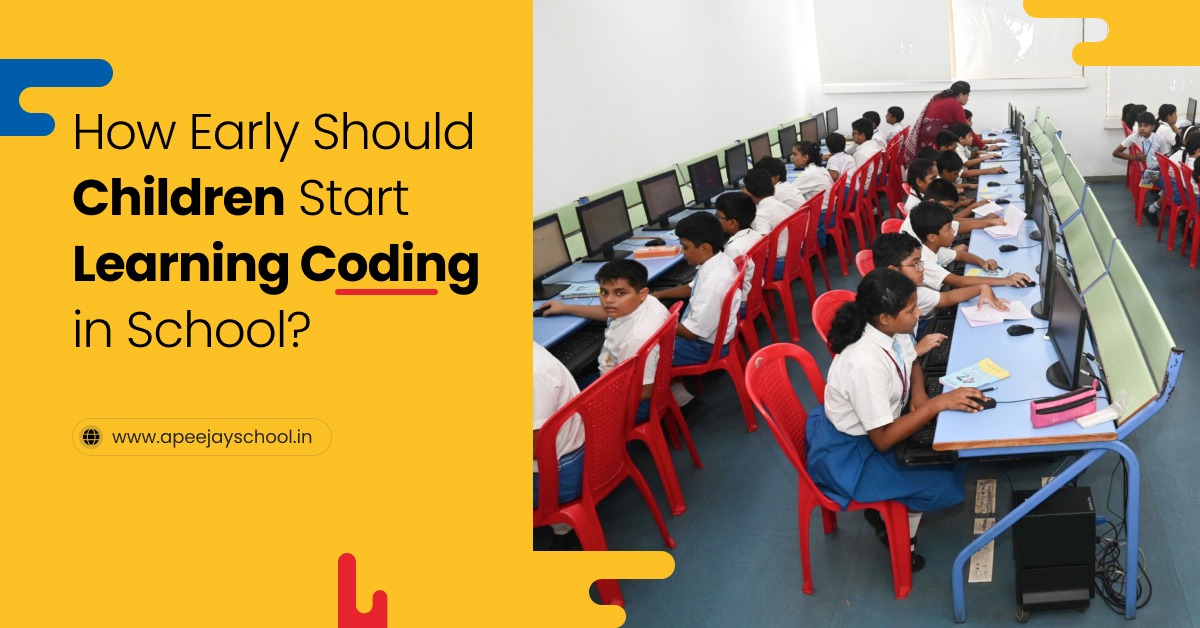
How Early Should Children Start Learning Coding in School?
Technology is shaping every aspect of modern life. Therefore, coding for children has become an important part of education today. This blog discusses the importance of coding, when children should start learning it, the benefits of coding for students and how Apeejay promotes STEM education through its progressive curriculum.
FAQ. At what age should children start learning coding?
Children can begin learning coding between five and seven years of age. Early exposure helps children develop logical thinking, creativity and confidence while building a strong foundation for future technological learning.
What is Coding for Children?
Coding for children is the process of teaching young learners how to communicate with computers using simple instructions. It helps children understand how digital tools, apps and games work. Moreover, Computer programming for children develops logical thinking, creativity from an early age. It also supports STEM education by connecting science, technology, engineering, and mathematics with practical learning experiences.
FAQ. How does coding support academic learning?
Coding strengthens logical thinking, analytical reasoning and problem-solving skills. These abilities help students perform better in mathematics, science and other subjects. Additionally, coding improves concentration and attention to detail.
Why is Coding for Children Important? When Should Children Learn It?
Experts recommend introducing Coding for children between the ages of five and seven. At this stage, children easily absorb new concepts through games and activities. Schools like Apeejay should gradually introduce coding concepts from the primary grades.
Importance of Coding for Children:
- It improves logical thinking and structured problem-solving skills.
- It encourages creativity by helping students create digital projects.
- Coding in schools prepares learners for future technological careers.
- It strengthens analytical abilities and decision-making skills.
- Computer programming for children develops confidence in using technology.
- It creates a strong foundation for lifelong learning and innovation.
Apeejay understands the growing need for coding for children in modern education. Therefore, coding concepts are introduced gradually from the early years. Students learn through age-appropriate activities and engaging projects. This approach strengthens foundational knowledge and develops digital confidence, supporting long-term STEM education success.
FAQ. Is coding difficult for young children to learn?
No, coding can be taught through simple and engaging methods. Schools use age-appropriate tools, games and activities to explain concepts. Children learn gradually while having fun. This approach makes coding accessible.
Benefits of Coding for Children
1. Improves Problem-Solving Skills
Coding teaches children to identify problems and find solutions systematically. They learn to break complex tasks into smaller steps. Children become better problem-solvers in academics and daily life. That is why, Apeejay School included it early.
2. Builds Confidence with Technology
Modern education requires students to understand digital tools effectively. Through coding activities, children become comfortable using technology. They also gain confidence in exploring new digital platforms which support future learning opportunities.
3. Strengthens Academic Performance
The benefits of coding for students extend beyond technology subjects. Coding improves logical reasoning and mathematical understanding. As a result, students often perform better across different academic areas.
4. Prepares Students for Future Careers
Technology-related careers continue to grow worldwide. Learning coding early helps students understand future career possibilities. Schools like Apeejay that include coding provide valuable practical exposure making it relevant always.
FAQ. Why do schools include coding in their curriculum?
Schools like Apeejay include coding because technology is essential in modern life. Coding develops critical thinking, creativity and digital literacy. It also prepares students for future careers and helps them understand technology better.
Conclusion
The demand for technology skills continues to increase across industries. Therefore, introducing coding for children at an early age is highly beneficial. Apeejay supports this vision through its strong focus on technology and innovation. Enrol your child in Apeejay today and help them build future-ready skills.
Recent Posts
- What Happens When a Child Struggles to Make Friends at School?
- Cyber Safety Tips for Students: How Schools and Parents Can Keep Children Safe Online
- Is AI Replacing Homework? Here’s What Schools Think…
- Sleep Habits That Improve Academic Performance
- Do Small Class Sizes Really Help Students Learn Better?
- How Schools Help Shy Children Become Confident